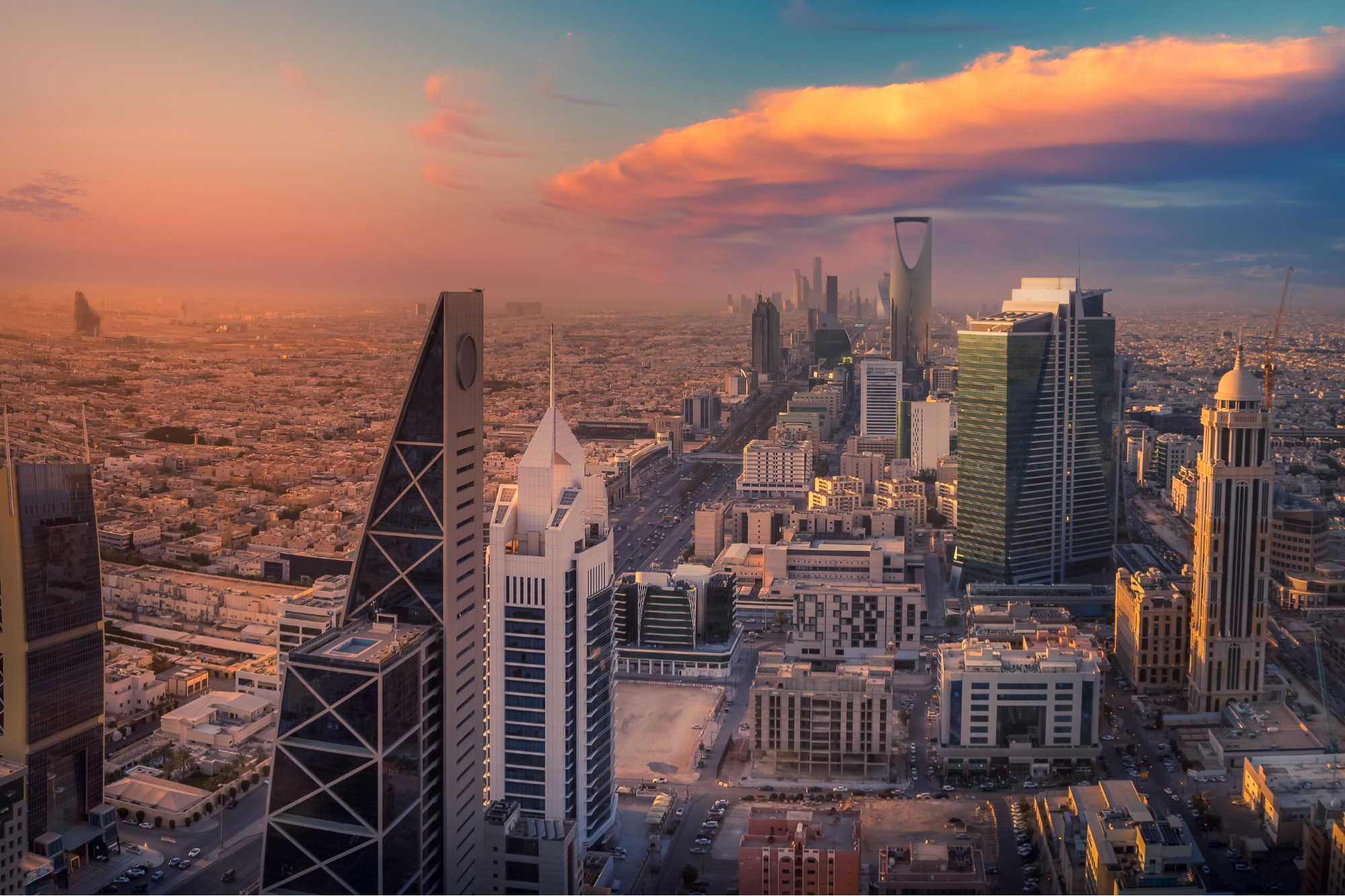
Saudi Arabia is heavily focused on developing, and even reshaping, its hospitality and tourism sector in line with Vision 2030, which aims to diversify national income sources and position the Kingdom among the top global tourist destinations, as well as enhance its standing as an attractive investment environment for both local and foreign investors.
In this article, we will explore the features of the hospitality sector in the Kingdom, discuss the investment opportunities available to foreigners, and outline the licenses and procedures required to start hospitality projects.
An Overview of the Hospitality Sector in Saudi Arabia
The hospitality sector is one of the most important sectors that the Kingdom is striving to develop, and it is considered one of the main pillars in achieving the goals of Vision 2030. Therefore, Saudi Arabia is attracting massive foreign direct investments to develop this sector by providing a promising investment environment based on advanced infrastructure, mega tourism projects, and diverse and state-of-the-art recreational facilities.
This is in addition to the tremendous support provided by the government to companies in both the public and private sectors, working to improve the quality of services offered, expanding the capacity of hotels and resorts, and operating according to international standards that provide customers with an unforgettable tourism experience, making Saudi Arabia a world-class hospitality destination that combines authenticity and modernity.
The Impact of Vision 2030 on the Hospitality Sector in Saudi Arabia (2)
Vision 2030 has a strong and direct impact on the hospitality sector in Saudi Arabia. Major cities such as Riyadh and Jeddah are witnessing an increasing influx of tourists and local and international visitors due to government initiatives and entertainment events, making them attractive tourist destinations and global centers for major international sports and media events.
In addition to the mega-projects and reforms led by the government, all of this has led to a radical transformation in the hospitality sector, which was previously underdeveloped and largely neglected. It has now become one of the most important sectors attracting foreign and local investment.
Among the most prominent of these projects and initiatives are:
- Launching the National Tourism Strategy.
- Opening the first regional office of the World Tourism Organization in Riyadh.
- The Red Sea Project.
- The Amaala Project.
- The Qiddiya Project.
- The NEOM Project.
In addition to the platforms and digitalization that have facilitated the visitor experience:
- Launching the "Visit Saudi" platform.
- Launching the electronic visa and expanding it to include 66 countries.
- Launching the pilot version of "Sarah," the smart tourism guide.
- Launching the Digital Tourism Strategy.
In addition to the distinctive programs in the tourism sector:
- Launching the "Tourism Pioneers" program for human capital development.
- Launching the "Tourism Support" program to support small and micro-enterprises. Key achievements and figures accomplished by the Kingdom in the sector:
- Saudi Arabia successfully attracted 100 million domestic and international tourists in record time, leading the Kingdom to raise its ambitions to a new target of welcoming 150 million tourists by 2030.
- It ranked first globally in tourism sector revenue growth for 2024.
- Saudi Arabia led the G20 countries in the growth rate of international tourist arrivals, with a 69% increase compared to 2019.
- Hosting global events such as: Expo 2030, the 2034 World Cup, and the Esports World Cup.
- Over 230,000 hotel rooms will support the hosting of the 2034 World Cup.
- 5 Saudi cities will participate in hosting the 2034 World Cup events.
Why Should You Invest in the Hospitality Sector in Saudi Arabia? (3)
From the significant increase in the number of domestic and international visitors to the mega-projects and government-led reforms, investors are paying serious attention. Here are five key reasons why the hospitality sector in Saudi Arabia is attractive to investors:
1- The tremendous growth of the tourism sector
Saudi Arabia has made the tourism sector a cornerstone of its economic diversification efforts. In 2023, it attracted more than 100 million visitors, exceeding its target, which prompted it to set a new goal of attracting 150 million visitors by 2030.
2- Diverse facilities and reforms
The government has implemented visa reforms such as: (electronic visas and visas on arrival for more than 60 countries) to facilitate entry for visitors from various countries around the world.
It has also invested heavily in infrastructure, developing airports, roads, services, and entertainment areas to make the Kingdom a global tourist destination. This is in addition to the strong and smart promotion of its cultural, heritage, and natural tourism attractions, thereby attracting more and more visitors.
3- Religious tourism and events
Religious tourism, based on Hajj and Umrah pilgrimages, attracts millions visitors annually, and this number is expected to double by 2030 with the completion of capacity expansion and infrastructure development projects. Similarly, events held in the Kingdom, such as the Riyadh Season, which attracted more than 17 million visitors in 2023, and the Jeddah Season, which drew millions of visitors through concerts, cultural events, and air shows, as well as the Formula E Championship, the Dakar Rally, the LIV Golf Tournament, and other international sporting events, all create high demand and a huge need for hotels and hospitality facilities, representing a golden opportunity for investors that should be seized.
4- A noticeable shortage of hotels
Despite the strong growth in the tourism sector, many cities in Saudi Arabia still lack high-quality hotel infrastructure. While luxury brands dominate in Mecca, Medina, and Riyadh, secondary cities such as Abha, Taif, AlUla, Tabuk, and the Eastern Province suffer from a limited presence of well-known hotel brands.
5- An attractive investment environment for investors
Saudi Arabia is actively working to attract foreign investment in the tourism and hospitality sectors through regulatory frameworks that support investors and public-private partnership models. The most prominent of these advantages include:
- Allowing 100% foreign ownership in most hospitality-related projects.
- Long-term land lease contracts in tourist areas with favorable terms.
- Government financial support and investment participation (especially through the Public Investment Fund and the Tourism Development Fund).
- Streamlined licensing procedures through platforms such as "Invest in Saudi Arabia" and the Ministry of Investment.
6- Attractive potential for long-term income and rewarding investment returns
The hospitality sector in Saudi Arabia is not limited to short-term gains, but can be considered a long-term income-generating asset class due to the following:
- High occupancy rates in major destinations .
- Long average length of stay for pilgrims and international visitors.
- Strong potential for additional revenue: food and beverage, spas, retail, and events. - Increased opportunities for exiting investments through real estate investment funds, initial public offerings, and institutional mergers and acquisitions, especially with the deepening of Saudi capital markets.
Ministry of Investment Licenses for Foreign Investors in the Hospitality Sector (1)
To apply for a license to operate tourist accommodation facilities, you must do the following:
- Log in to the Ministry of Tourism platform.
- Access the electronic services.
- Select Tourist Licenses.
- Submit an application for a license to operate tourist accommodation facilities.
- Pay the required fee.
Requirements
- A valid commercial registration certificate including the activity of operating a tourist accommodation facility (including the ISIC code).
- A valid license from the Ministry of Municipal and Rural Affairs and Housing.
- A valid permit from the General Directorate of Civil Defense, or its equivalent.
- Obtain approval from the Ministry of Environment, Water and Agriculture (for agricultural lands).
- Obtain approval from the National Center for Vegetation Cover Development and Combating Desertification for sites under its jurisdiction.
- Proof of the right to use the trademark from the Saudi Authority for Intellectual Property – if applicable.
- Integration with the Shomoos system.
- Direct integration of guest registration systems with the National Tourism Monitoring Platform.
- Do not commence operations before obtaining the license.
Required Documents
- Valid commercial registration certificate.
- Valid license from the Ministry of Municipal and Rural Affairs and Housing.
- Valid permit from the General Directorate of Civil Defense.
Finally; Investing in the hospitality sector in Saudi Arabia is a golden opportunity. According to reports by Colliers and Knight Frank, returns in the Saudi hospitality sector are among the highest in the GCC countries and are expected to remain strong over the next decade. (3)
If you aim to invest in the tourism and hospitality sector in Saudi Arabia, contact us to be your partners on this journey. We will handle all legal procedures for you with precision, professionalism, and commitment. We are here at Mohammed Al-Khaliwi Law Firm to assist you, working together to achieve your goals and contribute to the Kingdom's Vision 2030.
Disclaimer: This content is not legal advice. No liability is assumed. For legal consultation, please contact us.